
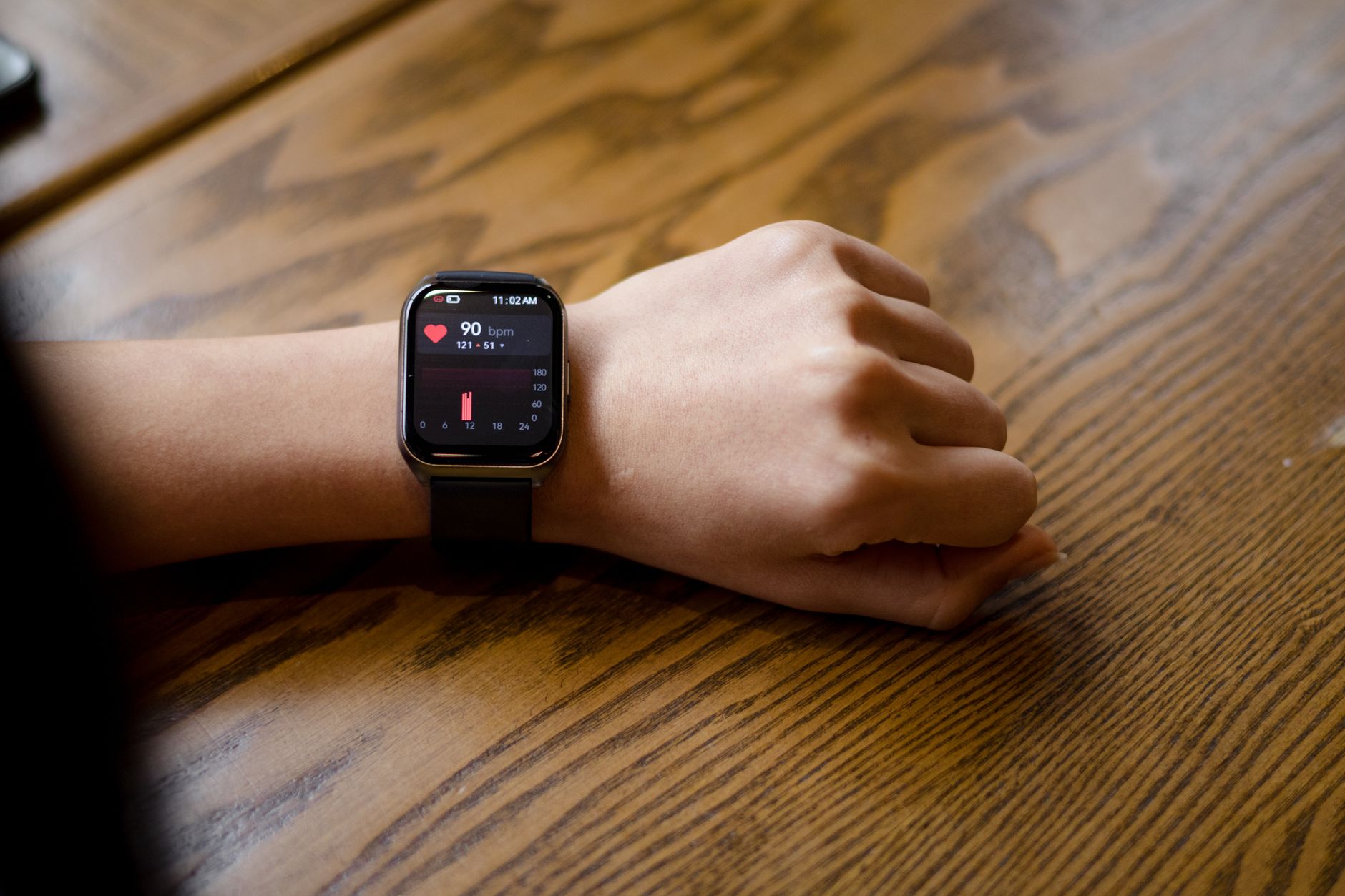
Your heart does not beat like a metronome. Even at rest, the gap between one beat and the next is constantly shifting, by tens of milliseconds, breath by breath. That jitter is not a malfunction. It is a sign your nervous system is doing its job, and the size of it turns out to be one of the more quietly predictive numbers your body produces.
That number is heart rate variability, or HRV. If you own an Oura ring, a Whoop, or a recent Garmin, you already have a version of it waiting on your phone each morning. Most people glance at it, decide it looks vaguely good or bad, and move on. It deserves better attention than that.
The vagus nerve, throttling your heart in real time
Two branches of your autonomic nervous system pull on your heart at once. The sympathetic branch (fight, flight, deadlines) pushes the rate up. The parasympathetic branch, carried mostly by the vagus nerve, pulls it back down. The vagus acts fast, adjusting within a single heartbeat, and it is the dominant influence when you are calm and recovered.
Here is the part that makes HRV useful. When vagal tone is high, your heart rate speeds up slightly as you breathe in and slows as you breathe out, producing large beat-to-beat variation. When you are stressed, sick, sleep-deprived, or hungover, sympathetic drive takes over, the vagal brake loosens, and the intervals become more uniform. Counterintuitively, a steady, unvarying heartbeat at rest is the bad sign. Variability is the sign of a system with headroom.
The metric most wearables report overnight is RMSSD, the root mean square of successive differences between beats. It is measured in milliseconds and it leans heavily on that vagal, parasympathetic activity, which is exactly why it responds to sleep and stress.
What the long cohorts actually found
The reason anyone bothers tracking this is that low HRV keeps showing up alongside earlier death. In the Framingham Heart Study, researchers tracked HRV in an elderly cohort and found that reduced variability was associated with a higher risk of dying over follow-up, independent of the usual cardiac risk factors Circulation, 1994. The pattern has since been echoed across other population cohorts: people in the lowest band of HRV tend to fare worse than those in the highest.
Hold onto the word associated. These are observational studies. They tell you that low HRV travels with poor outcomes, not that raising your Tuesday reading buys you extra years. Low HRV may be less a lever than a gauge, reflecting the accumulated state of your cardiovascular and autonomic health rather than causing the damage directly. That distinction matters, and anyone selling you an HRV gadget will not emphasize it.
What HRV genuinely is good at is short-term feedback. It moves fast, within a day or two, in response to things you control.
The numbers move for boring, honest reasons
Alcohol is the cleanest demonstration. Two glasses of wine and your overnight HRV often drops noticeably, sometimes by 20 to 40 percent, because ethanol suppresses vagal activity while your body metabolizes it. You feel it as a poor night even after eight hours in bed. The mechanism is straightforward autonomic suppression, and the wearable catches it whether or not you want it to.
Sleep does the opposite. Deep, uninterrupted sleep is when parasympathetic tone runs highest, which is why HRV typically climbs through the night and why fragmented sleep flattens it. If you want the longer version of that story, see /live/deep-sleep-brain-repair.
Endurance training tends to raise resting HRV over weeks, consistent with the well-documented drop in resting heart rate that fit people develop. Slow breathing works acutely: breathing at roughly six breaths per minute drives the heart-rate swings into resonance with the baroreflex, and HRV shoots up while you do it. Whether daily HRV biofeedback produces lasting benefit is still an open question, but the acute effect is real and you can watch it happen on a live readout.
Reading your own number without fooling yourself
The single biggest mistake is comparing your HRV to someone else’s. Absolute values are wildly individual, driven partly by genetics, age, and even where the sensor sits. A 35 kg deadlifter with an RMSSD of 45 ms is not less recovered than a friend at 90 ms. Your trend against your own baseline is the only comparison worth making.
| Age band | Typical overnight RMSSD range (ms) |
|---|---|
| 20s | 55 to 105 |
| 30s | 45 to 90 |
| 40s | 35 to 75 |
| 50s | 30 to 65 |
| 60s+ | 25 to 55 |
Treat those ranges as loose orientation, not targets. HRV falls with age in nearly everyone, and women and men differ. Wearables also disagree with each other, so numbers from two devices are not interchangeable.
Here is what to do Monday morning. Stop reacting to single days. One low reading after a hard workout or a late meal means nothing. Watch the seven-day rolling average. A sustained decline over a week or two, without an obvious cause, is your cue to pull back on training load, prioritize sleep, or check whether you are getting sick, since HRV often drops a day or two before symptoms appear.
Where the usefulness ends
HRV is noisy, personal, and easy to over-interpret. It cannot diagnose anything, it does not distinguish good stress from bad, and chasing a higher number for its own sake is a fast route to anxiety about a tool meant to reduce it. If your training is improving, your sleep is solid, and you feel strong, a modest HRV does not need fixing.
Used narrowly, though, it earns its place. It is one of the few metrics that will tell you, before you consciously notice, that you have taken on more than you are recovering from. That early warning, quietly delivered each morning, is the whole point.