Moving From
Data to Direction
We have more health data than ever before. Smart rings, step counters, blood panels with hundreds of numbers. But having all that data doesn't help much if nobody shows you what to actually do with it.
It started with watching my parents
My mother had a stroke. Before that she was already dealing with carotid artery disease, a family history of diabetes and high cholesterol, all at the same time. My father went through dual knee replacements, open-heart surgery to repair a heart valve, and eventually a pacemaker for a heart condition he had carried his whole life without even knowing about it.
Watching your parents go through the healthcare system is one of the hardest things. You sit in waiting rooms. You Google terms you don't understand. You watch people you love walk out with a diagnosis and a prescription but no real explanation of what comes next or how to actually change anything.
Today my father is living with dementia. That one is hard to put into words. But it has made one thing really clear to me. You can't wait until something goes wrong to start paying attention to your health. The healthcare system is great at treating a crisis. It's not built for prevention. That part is on you.
That's really why SelfHealth Living exists. Not because we have all the answers, but because the information that could genuinely help most people is already out there. It's just buried in medical jargon, scattered across research papers, and sitting inside bloodwork reports that read like a foreign language. We built this to make that information actually usable.
40+
The decade when prevention becomes urgent
80%
Of chronic disease is driven by lifestyle, not genetics
1
Knowledgeable friend is all most people need to start
A knowledgeable friend, not a doctor
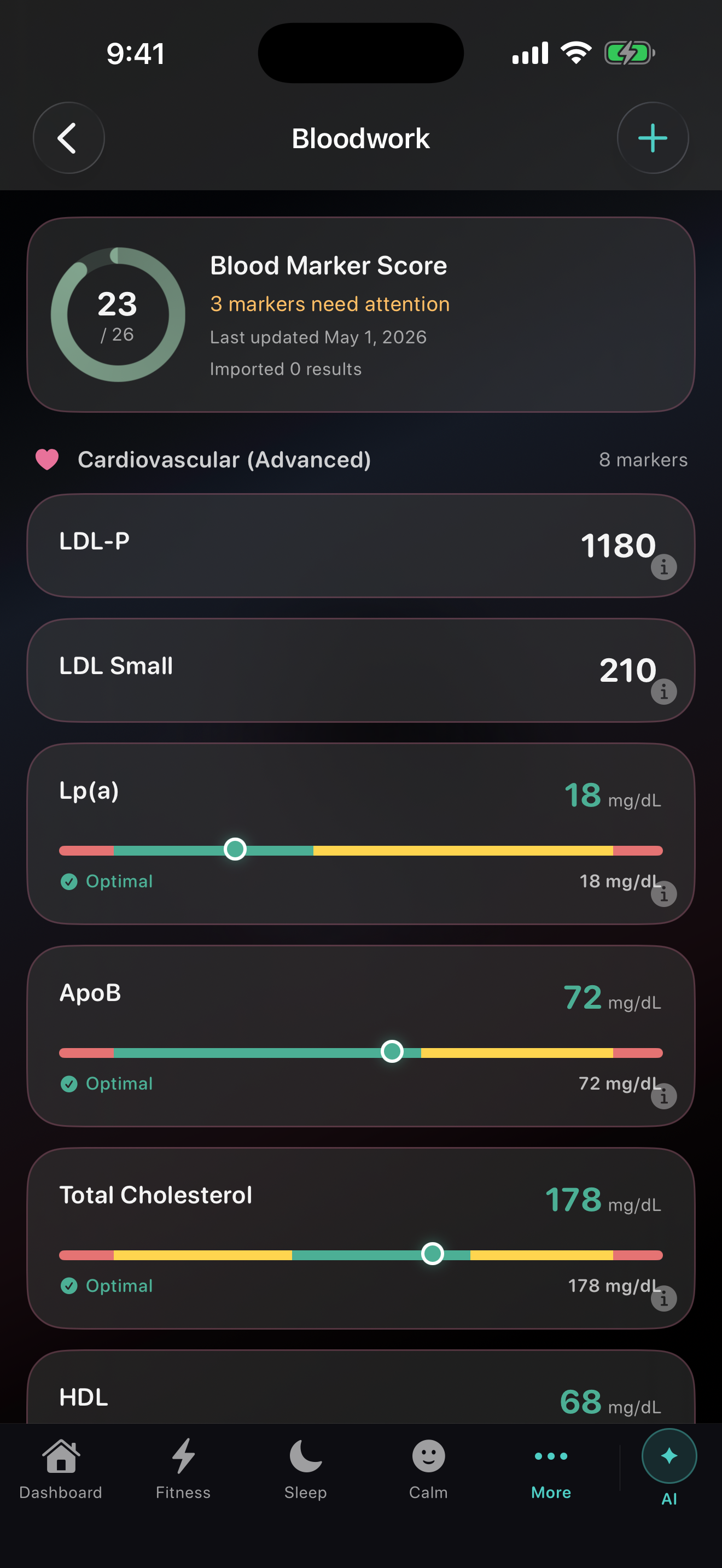
When you get a blood test back, it's a page full of abbreviations and reference ranges that honestly just stresses you out more than it helps. When you check your sleep on your watch, you see charts. But nothing tells you what to actually do about it.
Through our content and our iOS app assistant, Aliya, we take those confusing numbers and turn them into plain-English steps you can actually start with today.
Whether that's resistance training to hold onto your muscle mass after 40 (that's our Train pillar) or building meals that actually work for your body (our Fuel pillar), everything we do is grounded in real science aimed at keeping you strong and sharp as you get older.
Our Journey & Roadmap
The Genesis
We started building the SelfHealth framework, motivated by one big frustration: your wearable data and your blood work were living in completely separate worlds with no way to connect them.
Engineering Aliya
Built and trained Aliya, our on-device AI assistant, to read your lab results and actually explain what those numbers mean for your health in plain English.
Private Release & Launch
Opening early access and welcoming the first group of members into the iOS app. If you're reading this, that could be you.
What Early Users Are Saying
"Aliya explained my high LDL cholesterol without the usual medical panic. I immediately added the fiber recommendations to my diet and felt in control instead of anxious."
"Finally, an app that connects my sleep stages directly to my daily training load. I've been following the grip strength protocols and my joint recovery has improved dramatically."
Our Core Standards
On-Device Privacy First
Your health data stays yours. SelfHealth processes everything on-device wherever we can, so your most sensitive information never has to leave your phone.
Science-Backed Content
We don't chase trends or quick fixes. Everything in our Train and Fuel sections is grounded in peer-reviewed research, not whatever is popular on social media this week.
Physician Collaboration
We're not trying to replace your doctor. We help you have better conversations with them. Aliya can pull together your biomarker trends so you walk into your next checkup actually prepared.