
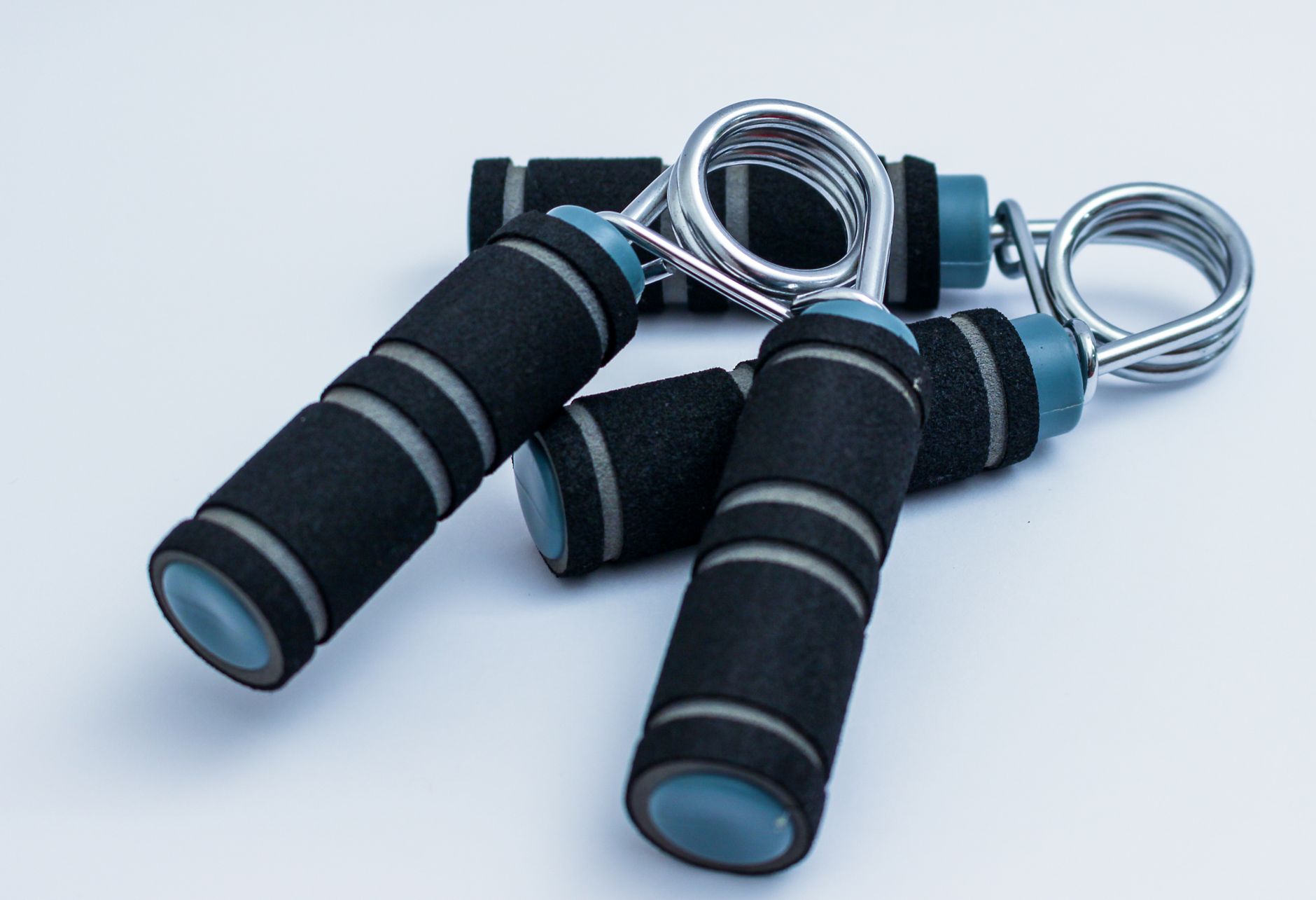
A weak handshake predicts your risk of dying better than your blood pressure does. That’s not a metaphor. It’s what the data shows.
In the PURE study, a huge investigation spanning 17 countries and nearly 140,000 people, every 5 kg drop in grip strength came with a 16% higher risk of dying from any cause. Grip beat systolic blood pressure as a predictor of cardiovascular death (Lancet, 2015).
And yet almost nobody has ever had their grip measured. That’s a mistake, and it’s an easy one to fix.
What Grip Strength Actually Tells You
You measure grip with a hand dynamometer. You squeeze, it reads out a number. That’s it.
But that one number is standing in for something much bigger: your total body strength, your muscle mass, and how well your nervous system drives your muscles.
Here’s the thing. Your hands aren’t special for survival. What makes grip so predictive is that it tracks your overall strength almost perfectly. When your grip starts to fade, it’s usually because sarcopenia, age-related muscle loss, is quietly happening everywhere in your body. Grip is just the easiest place to catch it in the act.
Think of it as a biomarker you can test in ten seconds. No blood draw, no lab, no waiting for results.
Why It Matters
The research points the same direction over and over. Low grip predicts higher all-cause mortality, cardiovascular disease, cognitive decline, and losing your independence as you age.
A meta-analysis in the BMJ (2018) found grip strength linked to mortality even after accounting for age, physical activity, and existing disease. So it’s not just spotting people who are already sick. It’s flagging risk in people who look perfectly healthy on paper.
Grip also predicts how well you recover. Surgical patients with a stronger grip have fewer complications and get out of the hospital sooner. It reflects your physiological reserve, the buffer you’ve got when your body gets hit with stress.
What the Studies Show
The evidence here is deep and it’s consistent.
PURE study (2015): Grip strength was inversely tied to all-cause mortality, cardiovascular mortality, and heart attack, across every income level and region (Lancet).
UK Biobank (2018): In over 500,000 adults, lower grip strength meant higher risk of death, cardiovascular disease, respiratory disease, and cancer (BMJ).
The brain connection: Grip strength tracks with cognitive performance, and a weaker grip is associated with higher risk of cognitive decline and dementia in older adults (Frontiers in Aging Neuroscience, 2021).
What gets me is how well a simple hand squeeze holds up against expensive, invasive tests. It competes with a full cardiac workup for predictive power, and it costs almost nothing.
What Your Grip Should Be
Grip is measured per hand, usually the dominant one. Below are rough healthy averages by age and sex, in pounds. Falling well below your bracket is your warning sign.
| Age | Men (lbs) | Women (lbs) |
|---|---|---|
| 20–29 | 101–119 | 62–75 |
| 30–39 | 99–117 | 60–73 |
| 40–49 | 95–112 | 57–71 |
| 50–59 | 88–106 | 53–66 |
| 60–69 | 77–95 | 46–60 |
| 70+ | 66–84 | 40–53 |
The clinical red line for sarcopenia risk sits below 60 lbs for men and below 35 lbs for women, per the European Working Group on Sarcopenia. If you’re near or below those numbers, it’s time to train.
How to Improve It
Good news: grip responds fast, often within a few weeks. But don’t just train your hands. Since grip reflects your total strength, the biggest wins come from getting stronger everywhere.
1. Carry heavy things. Loaded carries like farmer’s walks and suitcase carries build grip endurance and full-body strength at the same time. Grab a heavy pair of dumbbells and walk 30 to 40 yards. Do 3 to 4 rounds.
2. Dead hangs. Hang from a pull-up bar for time. Start at 10 to 20 seconds and build toward 60. Bonus: it decompresses your spine.
3. Pull heavy. Rows, chin-ups, and heavy pulling load your grip under real force. Skip the lifting straps on your working sets when you can.
4. Do some direct grip work. Wrist curls, plate pinches, or a Captains of Crush gripper 2 to 3 times a week. Small dose, real returns.
5. Add a little each week. Progressive overload is the rule behind all strength gains. Add weight, reps, or time as the weeks go on. I break down the full framework in why strength training after 40 isn’t optional.
A simple plan: farmer’s carries twice a week, dead hangs after every session, pull heavy in your main lifts, and test your grip once a month.
The Honest Part
Here’s the catch. Grip strength is a symptom, not the disease. You can’t grip-train your way to a longer life while ignoring your muscle mass, your cardio, and your sleep. A strong handshake on a frail body is a mirage.
And grip declines with age no matter what you do. The goal isn’t to stop that decline. It’s to start from a higher point and slow the slope. Someone who trains into their 60s with a grip of 100 lbs has a decade of buffer over someone sitting at 66 lbs.
So the real takeaway: measure it, then go train the whole body that produced it. Get a cheap dynamometer, test yourself, and treat that number like a canary in the coal mine. If it’s dropping, your muscle is telling you something before the scale or the mirror ever will.
Listen early.