
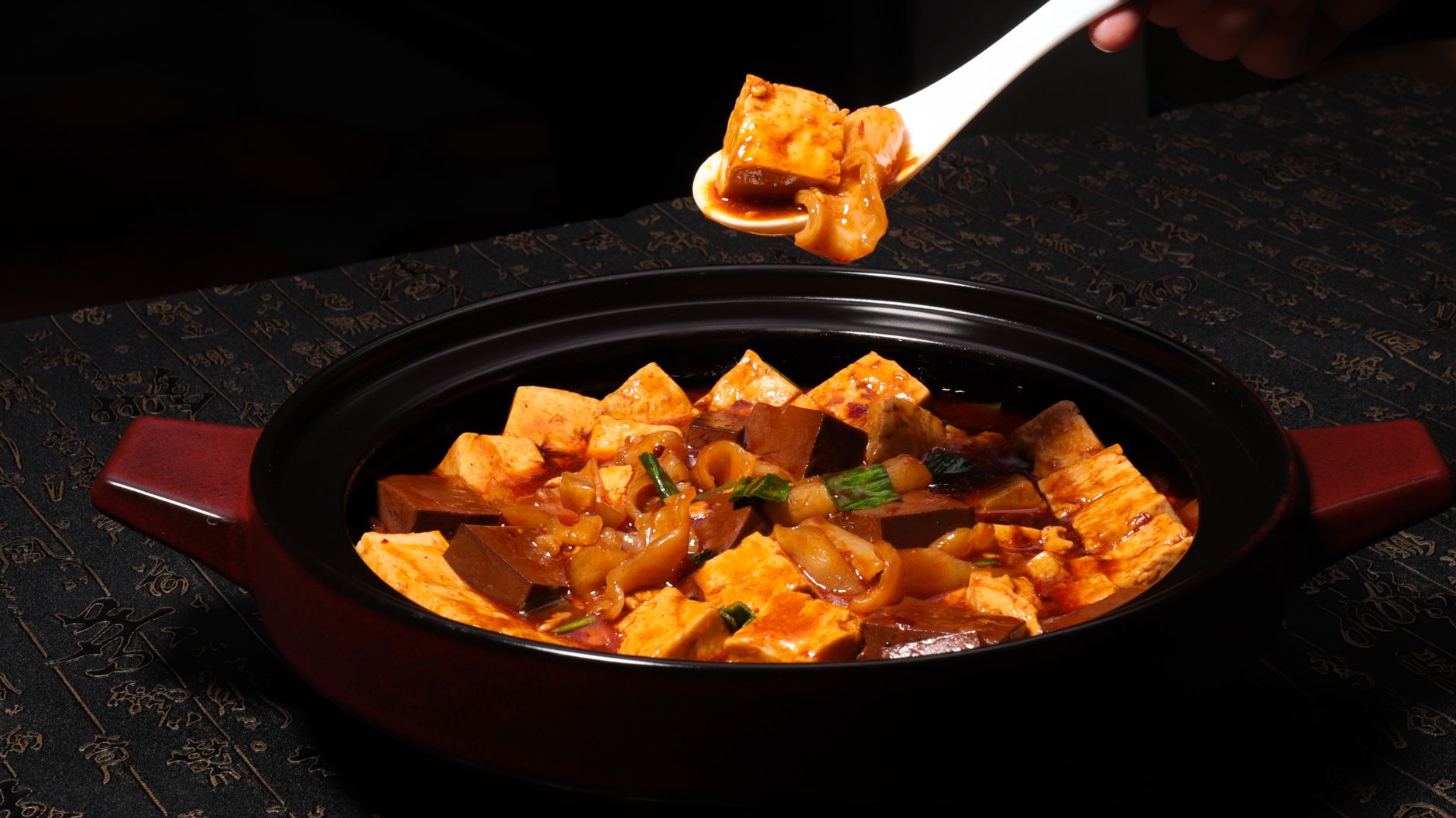
Mapo tofu was never really about the pork. The pork was a garnish, a handful of mince fried dark for savoriness. The soul of the dish is doubanjiang, a fermented broad-bean and chili paste that has been aging in earthenware crocks in Pixian for months before it reaches your pan. That means the flavor engine is already vegetarian. Swap the mince for browned extra-firm tofu and shiitake, and you lose almost nothing while landing around 20 grams of protein a serving.
This is a Tuesday dish. Fifteen minutes of prep, five minutes of cooking, one pan. It reheats better than most stir-fries because the sauce is thickened and clingy rather than watery.
What the fermented paste is actually doing
Doubanjiang (豆瓣酱) is the reason this works. It is broad beans and chilies fermented with salt, sometimes for a year or more, which breaks proteins down into free glutamates. That is the same savory compound that makes parmesan and soy sauce taste deep. You are not adding heat so much as adding a base note that a fresh chili can never reach. Fry it in hot oil until the oil runs red and the raw edge cooks off, roughly ninety seconds. Skip this step and the dish tastes flat and slightly bitter.
The tofu is your protein backbone, and soy earns its place beyond the macros. A meta-analysis of 38 controlled trials found that swapping animal protein for soy protein lowered LDL cholesterol by around 13 percent (NEJM, 1995). That effect scales with intake, and a bowl built on 600-plus grams of tofu is a meaningful dose.
The four ingredients pulling the weight
Tofu, two kinds. Soft or medium tofu gives you the custardy cubes that fall apart on your spoon. Extra-firm, crumbled and browned, plays the role of the mince: little seared nuggets that carry the sauce. Using both is what separates a good mapo from a wobbly one.
| Tofu type | Protein per 100g | Role in this dish |
|---|---|---|
| Silken | ~5g | too fragile, skip |
| Soft / medium | ~7g | the signature cubes |
| Firm | ~12g | works if that is all you have |
| Extra-firm | ~14-17g | crumbled, browned, the mince |
Garlic and ginger. Not background aromatics here, they go in generously. Garlic is one of the more reliably studied blood-pressure foods: a meta-analysis of randomized trials found garlic preparations lowered systolic pressure by about 8 mmHg in hypertensive adults (BMC Cardiovasc Disord, 2008). You are eating four cloves across the pan, so this is not a trivial amount.
Chili. Beyond the doubanjiang, a spoon of ground chili builds color and warmth. Regular chili eaters in a large Italian cohort had lower all-cause and cardiovascular mortality over eight years, independent of overall diet quality (J Am Coll Cardiol, 2019). Association, not proof, and the capsaicin mechanism is still being worked out. But it is a nice thing to know while your lips are buzzing.
Shiitake mushrooms. They bring a meaty chew and their own glutamates, stacking savoriness on top of the fermented paste. The beta-glucans in mushroom cell walls are a fermentable fiber your gut bacteria feed on, which is the same reason a fiber-forward gut matters. Dried shiitake, soaked, taste deeper than fresh, and the soaking liquid becomes your stock.
The numbing part is not optional
Sichuan peppercorns create málà, the tingle-heat combination that defines this cuisine. The active compound, hydroxy-alpha-sanshool, activates touch and tingle nerves rather than heat receptors, which is why it feels like a mild electric fizz rather than a burn. Toast them in a dry pan until fragrant, then grind. Pre-ground loses most of its punch within weeks, so buy whole if you can.
A note on fat. Mapo tofu wants a neutral high-heat oil for frying the paste, and extra-virgin olive oil is the wrong tool here, its low smoke point and grassy flavor fight the dish. This is one of the cases where the Mediterranean default does not apply. Use a neutral oil, or a small amount of toasted chili oil, and spend your olive oil elsewhere in the week.
Approximate nutrition per serving
Serves 4. Per serving of mapo alone: roughly 250 calories, 18-20g protein, 15g fat, 9g carbohydrate, 3g fiber. Served over 3/4 cup cooked brown rice, add about 110 calories and push protein toward 23g. Whole grains, not white rice, matter here: a dose-response meta-analysis linked each 90g of whole grains a day to a 22 percent lower risk of cardiovascular disease and lower all-cause mortality (BMJ, 2016).
Storage, reheating, and the swaps worth making
It keeps 4 days in the fridge and reheats beautifully in a pan with a splash of water to loosen the sauce. The soft tofu breaks down a little on day three, which honestly makes it creamier. I would not freeze it, the tofu goes spongy.
Swaps that work: crumbled tempeh instead of extra-firm tofu gives a nuttier, firmer bite and a few extra grams of protein. A tablespoon of fermented black beans (douchi) rinsed and mashed in with the doubanjiang adds a whole new layer of funk if you have them. For a milder version, cut the ground chili and lean on the paste alone, the numbing peppercorns still make it unmistakably Sichuan. Vegans lose nothing, the whole dish is already plant-based. If you want it richer, finish with a teaspoon of chili oil off the heat rather than adding more oil to the fry, so the sauce stays clinging instead of greasy.
The finish is where lesser versions fall down. Kill the heat, scatter raw sliced scallion greens and a final pinch of ground Sichuan pepper over the top, and serve within a minute. That raw allium hit and fresh tingle against the deep braised sauce is the contrast that makes people go back for a second bowl.