
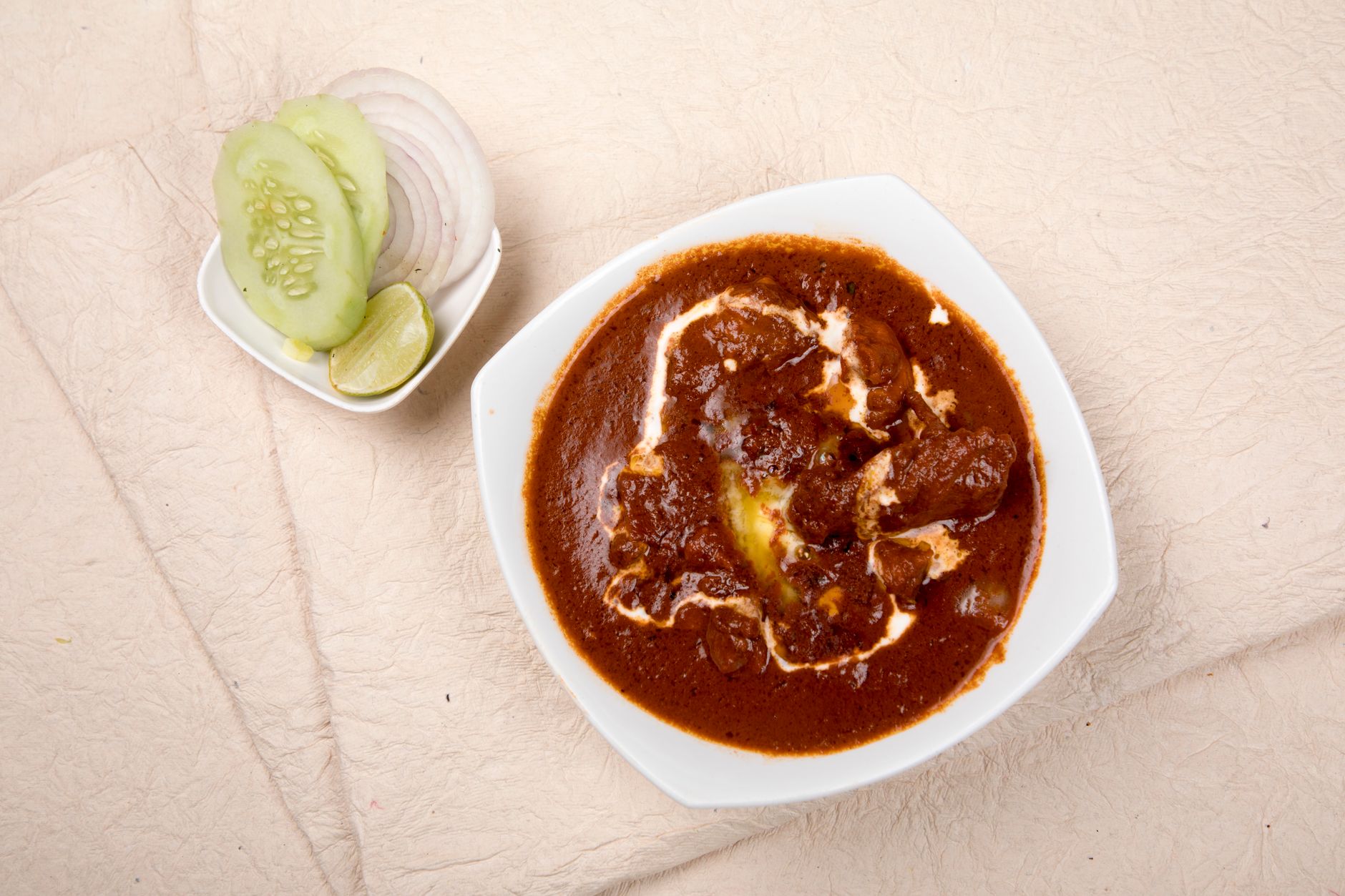
A single serving of this rajma carries more fiber than most people eat in a day, and it does it while tasting like something your friend’s Punjabi grandmother would nod at.
Rajma is red kidney beans stewed in a thick onion-tomato masala, eaten across North India with rice (rajma-chawal is practically a national comfort food). It is one of the best arguments going for vegetarian protein, because the beans are the point, not a sad substitute for meat. The trick is patience with the onions and restraint with nothing else.
What the beans are actually doing
Kidney beans are the whole reason this dish earns its place. One cooked cup brings roughly 15 grams of protein and 11 to 13 grams of fiber, most of it the soluble kind that feeds gut bacteria and slows glucose absorption. In a large US cohort, people who ate legumes four or more times a week had about a 22% lower risk of coronary heart disease than those eating them less than once a week Arch Intern Med, 2001. And when beans and other legumes were used specifically to lower the glycemic load of the diet, they improved HbA1c and blood pressure in people with type 2 diabetes over three months Arch Intern Med, 2012.
The fiber angle is not a footnote. In the largest synthesis of its kind, higher fiber intake tracked with lower all-cause mortality, and the benefit kept climbing up to around 25 to 29 grams a day Lancet, 2019. Two bowls of this gets you most of the way there. If you want the longer argument for why, read Beyond the Hype: Why 2026 is the Year of Fiber.
Olive oil instead of ghee. Traditional rajma often starts in ghee, and ghee tastes wonderful. But the base flavor here comes from browned onions and toasted spice, not from the fat itself, so a good extra virgin olive oil slots in without the dish losing its soul. That matters because the Mediterranean pattern built on olive oil cut major cardiovascular events by roughly 30% in the PREDIMED trial versus a low-fat control N Engl J Med, 2018. Use ghee if you want it for one batch and olive oil for the rest. Nobody is checking.
Garlic and ginger are not just aromatics. In a meta-analysis of controlled trials, garlic supplementation lowered systolic blood pressure by about 8 mmHg in people with hypertension, a meaningful nudge for a food you were adding anyway BMC Cardiovasc Disord, 2008. You get less than a supplement dose in a serving, but it stacks with everything else on the plate.
Turmeric and cumin carry the color and the warmth. Turmeric’s curcumin is a well-studied anti-inflammatory compound in the lab, though whole-diet effects in humans are more modest than supplement headlines suggest. Bloom it in hot oil with the cumin seeds so the fat-soluble compounds actually get extracted and the raw, dusty edge cooks off.
The technique that separates good rajma from beige rajma
Brown the onions properly. This is the whole game. You want them past translucent and well into deep golden, which takes 12 to 15 minutes on medium heat and cannot be rushed with higher heat without scorching. Pale onions make pale-tasting rajma. Then let the tomato cook down until the oil separates and pools at the edges, a sign the masala has lost its raw water and concentrated. Only then do the beans go in.
One more thing: mash a ladleful of the cooked beans against the side of the pot and stir it back. That starch is what makes the gravy cling and turn glossy instead of watery.
Nutrition per serving (curry only, serves 4)
- Calories: about 300
- Protein: about 15 g
- Fiber: about 13 g
- Fat: about 11 g (mostly from olive oil)
- Carbohydrate: about 38 g
Serve it over brown rice with a spoon of Greek yogurt or a side of raita and you clear 22 grams of protein and push fiber higher. That yogurt also cools the chili and adds casein, which digests slowly.
Storage, reheating, and the batch logic
Rajma is one of those dishes that is genuinely better on day two, once the flavors settle. It keeps 5 days in the fridge and freezes beautifully for 3 months. Reheat gently with a splash of water, because the gravy thickens as it sits and you want it loose enough to coat rice. Freeze it flat in a bag and it thaws in minutes.
This is the meal-prep case for it: cook a double batch of beans, and you have four to eight lunches for the price of one evening’s attention.
Variations worth making
- Whole spice tadka finish. Instead of stirring garam masala in at the end, bloom cumin and a dried red chili in a tablespoon of hot oil and pour it sizzling over the pot right before serving. It smells extraordinary.
- Higher protein, one pot. Fold in a cup of cubed pan-seared paneer or firm tofu in the last five minutes. Tofu drinks up the gravy; paneer stays firm and gives you a chew.
- Smokier version. Char the tomatoes under the broiler before pureeing, or add a pinch of smoked paprika, for a dhaba-style depth without a tandoor.
- Canned shortcut. Two 400 g cans of kidney beans, drained, skip the soak entirely and cut the cook time to 30 minutes. The dried-bean version has better texture, but the canned one on a Tuesday is the one you’ll actually make.
If you like this, the same browned-onion base runs chana masala and works with black lentils too. Learn it once and half of North Indian home cooking opens up.