
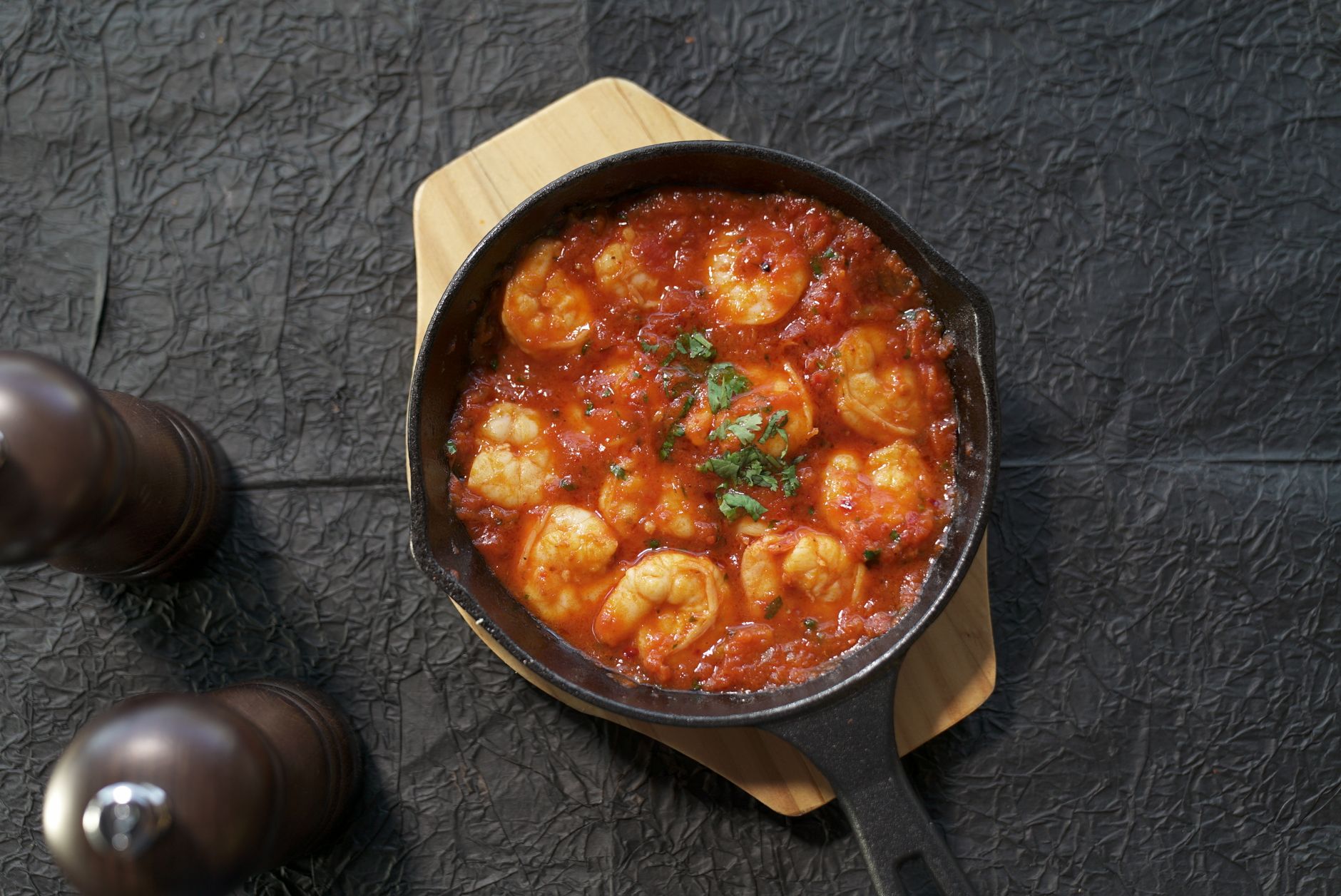
Shrimp go from raw to rubber in about ninety seconds of overcooking, which is exactly why saganaki treats them so well. You build the sauce first, then drop the shrimp in at the very end and let the residual heat finish them. They stay plump. Nobody at the table gets the sad, bouncy shrimp that ruins most home versions.
This is the Greek taverna dish, garides saganaki, named for the two-handled pan it’s traditionally cooked in (a sagani). Shrimp simmered in a tomato sauce sharp with garlic and oregano, blanketed in feta that softens without fully melting, finished with fresh dill or parsley and a squeeze of lemon. It fits the Mediterranean pattern so cleanly it could be the cover photo: olive oil as the fat, tomatoes and herbs doing the flavor work, seafood as the protein, and almost no starch. This is firmly a low-carb dinner, and a fast one. One skillet, start to finish, around 25 minutes.
What the main ingredients are doing
Shrimp are one of the leanest complete proteins you can buy. A 6-ounce serving lands around 35 grams of protein for roughly 180 calories, plus a genuinely useful dose of selenium and iodine. People still flinch at the cholesterol, but dietary cholesterol from shrimp has a modest effect on blood lipids for most people, and the fear was always overstated. Buy them shell-off to save yourself ten minutes, and don’t fear frozen: most “fresh” shrimp at the counter were thawed anyway.
Extra virgin olive oil is the default fat here, and it earns the spot. In the PREDIMED trial, a Mediterranean diet supplemented with extra virgin olive oil cut major cardiovascular events compared with a low-fat control N Engl J Med, 2018. Use a real glug, four tablespoons across four servings, because the polyphenols and the flavor both live in the oil. This is not the place to measure it out in a teaspoon and feel virtuous.
Garlic is not a garnish in this dish, it’s structural. Six cloves, browned gently so they turn sweet and nutty instead of acrid. Beyond flavor, a meta-analysis of controlled trials found garlic modestly lowered blood pressure, more so in people who were already hypertensive BMC Cardiovasc Disord, 2008. You won’t get a clinical dose from one dinner, but it’s a real effect worth stacking over time.
Tomatoes bring the acid and the body. Cooking them in fat matters: lycopene, the carotenoid that gives tomatoes their color, becomes far more absorbable when heated in oil rather than eaten raw and cold. That’s the mechanistic reason a cooked tomato sauce built on olive oil delivers more of the pigment than a raw slice ever could. Canned whole tomatoes, crushed by hand, beat out-of-season fresh nine months of the year.
Feta is the finish that makes it taste like a restaurant. Buy the block in brine, not the pre-crumbled stuff, which is drier and often cut with anti-caking agents. Real Greek feta is sheep-and-goat milk, tangy and briny enough that you’ll need less added salt in the sauce. It softens under the lid rather than turning to grease, giving you creamy pockets against the sharp tomato.
How to make it
The whole thing rides on sequencing. Sauce until it tastes finished, then shrimp, then feta, then off the heat. If you throw the shrimp in early you will overcook them while you wait for the sauce to reduce. Don’t.
Serve it in the pan with crusty bread if you’re not counting carbs that night, or over a pile of sauteed spinach or cauliflower rice to keep it strictly low-carb. Either way the sauce is too good to leave behind.
Protein per serving, in context
One serving of this delivers roughly 35 grams of protein, which is right in the range most adults should aim for per meal to actually stimulate muscle protein synthesis. Here’s roughly where that target sits by age and goal:
| Group | Protein per meal | Daily target |
|---|---|---|
| Adults 19-40, active | 25-35 g | 1.2-1.6 g/kg |
| Adults 40-64 | 30-40 g | 1.4-1.6 g/kg |
| Adults 65+ | 35-40 g | 1.6-2.0 g/kg |
Older adults need more per meal, not less, because aging muscle is less responsive to a given dose of protein. A single serving of saganaki covers a meal’s worth for almost everyone at this table. If you want the mechanism behind those numbers, we went deeper in our protein guide.
Approximate nutrition per serving
Based on four servings: about 380 calories, 35 g protein, 10 g net carbs, 22 g fat (mostly from olive oil and feta), and around 3 g fiber. Skip the bread and it stays comfortably under 15 g net carbs. Add a thick slice and you’re eating a different, still very good, meal.
Storage, reheating, and variations
Saganaki keeps in the fridge for three days and reheats better than most seafood, because the shrimp are protected by the sauce. Warm it gently in a covered pan over low heat, or microwave in short bursts, and pull it the moment it’s hot. Overheating is the only way to ruin the leftovers.
It does not freeze well. The shrimp turn mealy and the feta breaks. If you want a make-ahead angle, make the tomato sauce base a day or two in advance, keep it in the fridge, and cook the shrimp fresh in five minutes when you’re ready to eat.
Variations worth making: swap the shrimp for chunks of firm white fish like cod or halibut, adding a couple of minutes since fish needs more time than shrimp. A pinch of red pepper flakes or a spoon of harissa in the sauce takes it toward North Africa. A splash of ouzo or dry white wine deglazing the pan before the tomatoes go in is traditional and adds a subtle anise depth. And if you like the Korean-Mediterranean crossover, the same fast-protein logic drives our gochujang-glazed salmon.
The test of a healthy recipe is whether you reach for it again in two weeks without being told to. This one passes because it doesn’t taste like a compromise. It tastes like something you’d order out.