
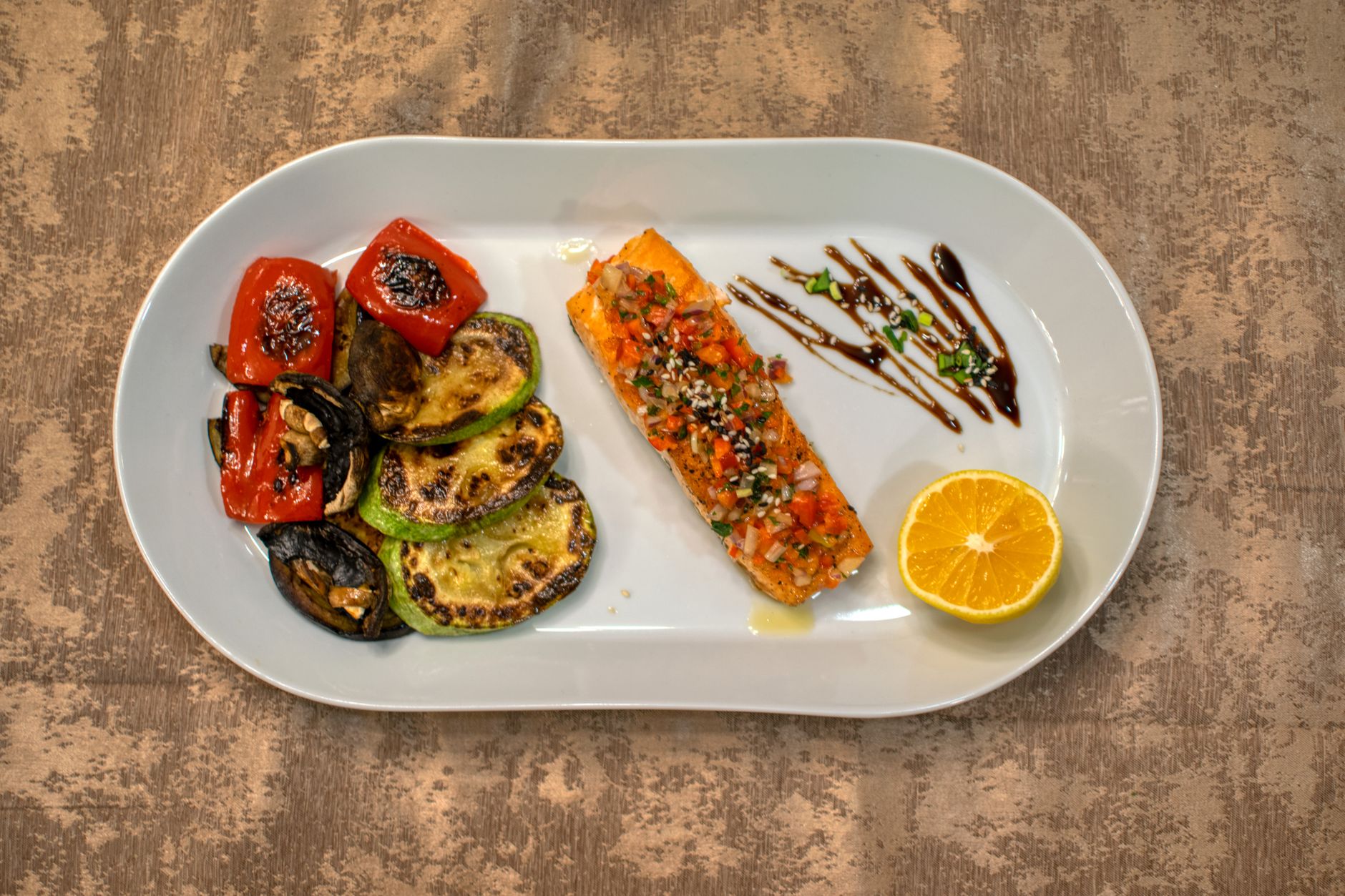
Fermented chili paste does something to salmon that a plain marinade cannot: the sugars in gochujang caramelize under a hot broiler while the paste’s living-culture funk pushes back against the fish’s richness. You get a lacquered, blistered top in eight minutes flat, and the salmon underneath stays soft and just-set. This is the rare healthy dinner that tastes better than the effort it took.
This is a low-carb dish, and an honest one. The whole plate lands around 12 grams of carbohydrate per serving, most of it from the tablespoon of gochujang, which I refuse to apologize for because it is where the flavor lives. It is also genuinely fast: one sheet tray, maybe ten minutes of hands-on work, and the broiler does the rest while you slice cucumbers.
What each ingredient is actually doing
Salmon is the point. A six-ounce fillet gives you roughly 34 grams of protein and a serious dose of long-chain omega-3 fats (EPA and DHA), the ones your body cannot build efficiently from plant sources. A large review of fish intake found that eating oily fish regularly was associated with meaningfully lower risk of death from coronary heart disease, largely credited to those omega-3s JAMA, 2006. Broiling instead of steaming matters here too, because dry high heat sets the surface proteins fast and keeps the interior from turning to paste.
Gochujang is fermented, and fermentation is not just a flavor trick. A controlled Stanford trial found that adding fermented foods to the diet increased gut microbiome diversity and lowered several markers of inflammation over ten weeks Cell, 2021. One glaze of gochujang is not a probiotic program, but the fermented depth is what makes this taste finished rather than merely spicy.
Garlic, and a lot of it, browned properly in the glaze. Beyond flavor, a meta-analysis of controlled trials found garlic supplementation modestly lowered blood pressure in people who were hypertensive to begin with BMC Cardiovasc Disord, 2008. You are not eating clinical doses off a sheet tray, but garlic earns its place on flavor alone and the rest is a bonus.
Extra-virgin olive oil is the fat I reach for even in a Korean dish, brushed on the fish and whisked into the glaze. It is the default fat of the Mediterranean pattern for good reason: in the PREDIMED trial, a diet supplemented with extra-virgin olive oil cut major cardiovascular events compared with a low-fat control N Engl J Med, 2018. A little toasted sesame oil goes in at the end for aroma, not for cooking, because its low smoke point makes it a finisher, not a searing fat.
Fresh ginger and rice vinegar are the brightness. Ginger brings a warm, resinous edge that cuts salmon’s fat, and the splash of rice vinegar at the end is the acid that wakes the whole plate up. If you skip the vinegar the dish tastes heavy and one-note. Do not skip it.
Approximate nutrition per serving
Per fillet with glaze, roughly: 380 calories, 34 g protein, 12 g carbohydrate (about 10 g net), 22 g fat. Serve it over a quick smashed-cucumber salad and you add maybe 4 g of carbs and a lot of crunch, keeping the whole plate comfortably under 20 g net.
Storage, reheating, and variations
Salmon reheats badly in the microwave, which turns it rubbery and fishy. If you are meal-prepping, cook it just to done, cool it fast, and eat it cold over greens the next day. That actually works beautifully with this glaze. If you must reheat, use a 300°F oven for six or seven minutes, gently.
The glaze itself keeps for two weeks in the fridge and is the real make-ahead move. Double it, and you have instant weeknight dinners: brush it on chicken thighs (broil longer, about 14 minutes, thighs hold up to the char better than breast), on shrimp (three minutes a side, done), or on thick slabs of firm tofu pressed dry for a genuine vegetarian version.
Want it hotter? Add a teaspoon of gochugaru to the glaze. Want it sweeter and stickier? A teaspoon of honey pushes the caramelization further, at the cost of a couple grams of carbs. If you can only find salmon with skin on, broil it skin-side down and the skin crisps into the best part.
For the carb side of your week, this pairs naturally with the vegetable-forward thinking in a smoked salmon power bowl, or lean into more fish nights with an easy miso-glazed cod that runs on the same fast-broil logic.
One more thing the evidence does not yet settle: whether the specific fermented cultures in gochujang survive high-heat broiling in any meaningful amount. Probably not much. So cook this because it tastes like a restaurant plate you made in twenty minutes, and let the omega-3s and the olive oil do the quantifiable work.