
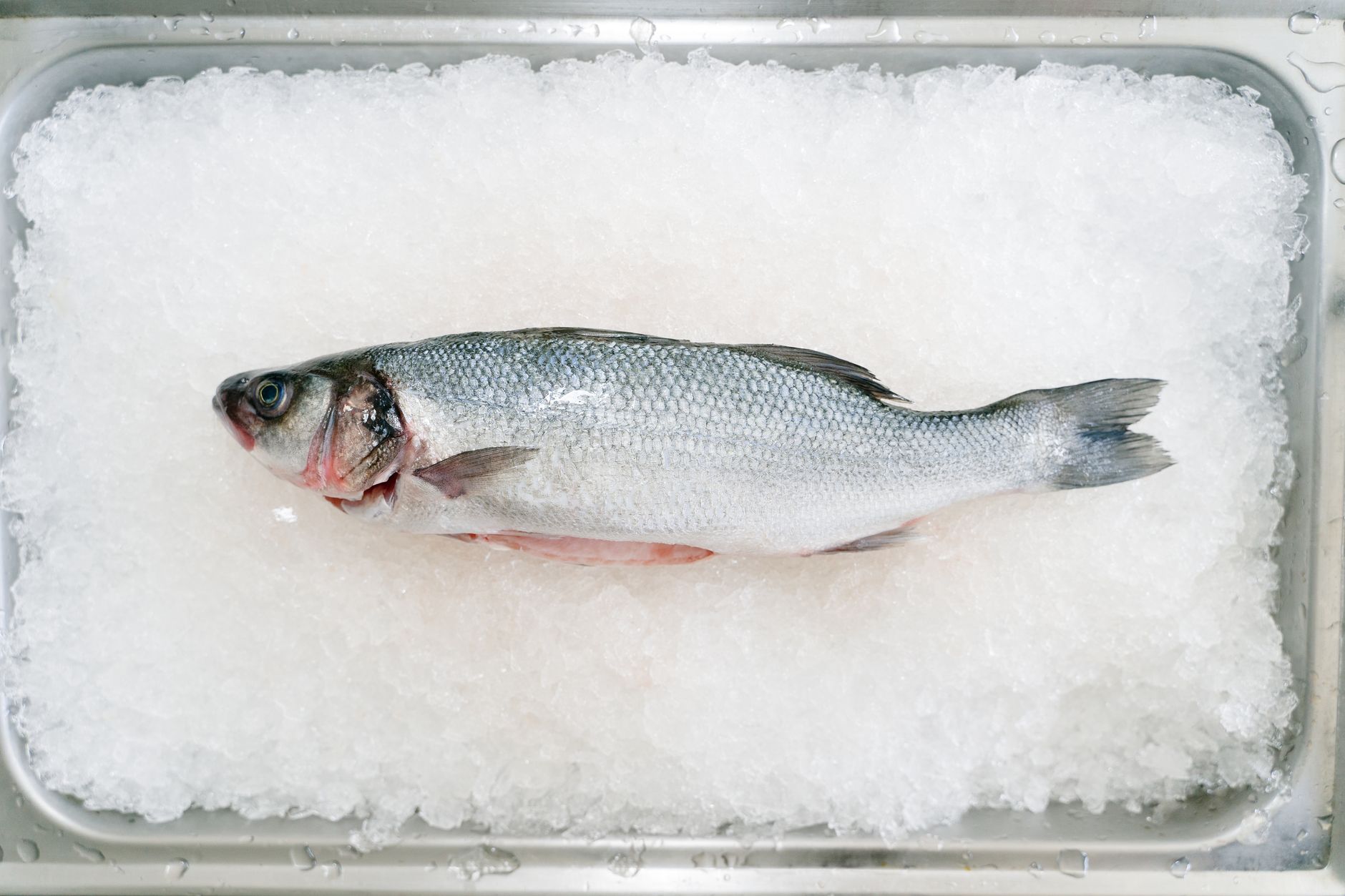
Fishermen off the Campanian coast used to cook the day’s least sellable catch in seawater with a few crushed tomatoes and call it acqua pazza, “crazy water.” It was a way to eat lunch on the boat with what was on hand. It is also, by accident, close to a perfect weeknight dinner: fish that cooks in minutes, a broth built from aromatics instead of cream, and nothing that needs a second pan.
The version that gets watered down in restaurants poaches the fillet limp and pale. That is not what we are doing. You sear the skin hard until it crackles, then build the broth around it so the crisp side stays crisp. This is a low-carb plate: the carbohydrate here comes from tomatoes and a little onion, not a bed of pasta, and it lands around 9g net per serving.
Why branzino, and why not swordfish
Branzino (European sea bass) is a lean, mild fish with skin that crisps like a chip and flesh that flakes into big clean petals. It is also low on the mercury scale, which matters if you eat fish as often as the Mediterranean pattern actually asks you to. That last part is where a lot of “eat more fish” advice quietly falls apart. The big, long-lived predator fish (swordfish, king mackerel, marlin, bigeye tuna) concentrate methylmercury, so eating them weekly is a genuinely different proposition than eating sardines or sea bass weekly.
| Fish | Mercury load | Omega-3 | Good for weekly eating |
|---|---|---|---|
| Branzino / sea bass | Low | Moderate | Yes |
| Sardines, anchovies | Very low | High | Yes |
| Salmon | Low | High | Yes |
| Cod | Low | Low-moderate | Yes |
| Swordfish, king mackerel | High | Moderate | Occasional at most |
The payoff for eating fish regularly is real. In older adults, higher blood levels of long-chain omega-3s from seafood were associated with about a 27% lower risk of total mortality and notably lower cardiovascular death over roughly 16 years of follow-up (JAMA Intern Med, 2013). That is an association, not a guarantee, but it is a consistent one, and branzino lets you collect on it without the mercury tax. If your grocer only has whole branzino, ask them to fillet it. Sea bream, snapper, or even cod fillets all work in this broth.
What’s carrying the flavor
Olive oil, and a lot of it. This is not a garnish drizzle. A third of the broth is good extra-virgin olive oil, emulsified into the tomato juices so the whole thing tastes rich without a drop of butter. Olive oil is the load-bearing fat of the Mediterranean pattern for a reason: in the PREDIMED trial, people assigned a Mediterranean diet supplemented with extra-virgin olive oil had roughly 30% fewer major cardiovascular events than the low-fat control group (N Engl J Med, 2018). Higher olive oil intake has since been linked to lower total and cause-specific mortality in large US cohorts as well (J Am Coll Cardiol, 2022). Use the bottle you would put on a salad, not the one you cook potatoes in.
Garlic, sliced not crushed. Four cloves, sliced thin and softened in the oil until fragrant but not browned, gives the broth its backbone. Beyond flavor, garlic has a modest but repeatable effect on blood pressure: a meta-analysis of controlled trials found garlic preparations lowered systolic pressure by around 8 mmHg in hypertensive people (BMC Cardiovasc Disord, 2008). You will not get a pharmacological dose from one dinner, but eating this way often adds up.
Capers and olives. This is the acqua pazza cheat code. Capers bring a briny, almost floral sharpness; olives add salt and a little bitterness that keeps the tomato from tasting flat. Together they do the job a long reduction would do, in five minutes, and they are why you barely need to add salt.
Cherry tomatoes. Halved and cooked just until they slump and release their juice, they become the body of the broth. Cooking tomatoes in fat makes their lycopene more available to absorb than eating them raw, which is one of those rare cases where the tastier version is also the more nutritious one.
Parsley and lemon at the very end. Off the heat, a fistful of raw parsley and a squeeze of lemon. This is the step people skip and then wonder why their food tastes muddy. Acid and a raw herb are what make a dish taste finished rather than merely cooked.
Getting the skin to crackle
The whole dish lives or dies on the sear, so give it a minute of attention. Pat the skin bone-dry with a paper towel, salt it, and lay the fillet skin-side down into hot oil. Then press gently with a spatula for the first 20 seconds so it does not curl and lose contact with the pan. Leave it alone for three to four minutes. When the skin is set and crisp it will release on its own; if it sticks, it is not ready. You are cooking the fish about 80% through on the skin side and only kissing the flesh side, so it stays juicy.
Then you build the broth in the same pan and lower the fish back in for the last minute, skin up, so it steams through without going soggy.
Nutrition per serving
Roughly 380 calories, 35g protein, 24g fat (mostly from olive oil), 11g total carbohydrate and about 9g net carbs, 2g fiber. Genuinely low-carb, genuinely filling, and it reheats better than most fish because the broth keeps it moist.
Storage, reheating, and variations
The broth keeps beautifully for three days in the fridge, so this is a decent make-ahead lunch even though the fish is best fresh. Store the fish and broth together in one container. To reheat, warm the broth in a small pan and add the fish for the last two minutes rather than microwaving it to rubber. You lose the crisp skin on day two, which is the honest tradeoff; the flavor is if anything better.
To stretch it into a smart-carb meal, spoon the whole thing over a scoop of farro or a thick slice of grilled sourdough rubbed with garlic, which turns the broth into the point of the dish. For more heat, double the chili and add a pinch of dried oregano. No branzino? This exact broth makes an excellent home for cod, snapper, or shrimp (add shrimp to the broth raw and cook two minutes, no separate sear needed). If you liked the fast-fish approach here, the miso-glazed cod runs on the same 20-minute logic with a completely different flavor.
Eat the broth. Do not leave it in the pan. That is where half the dinner is.